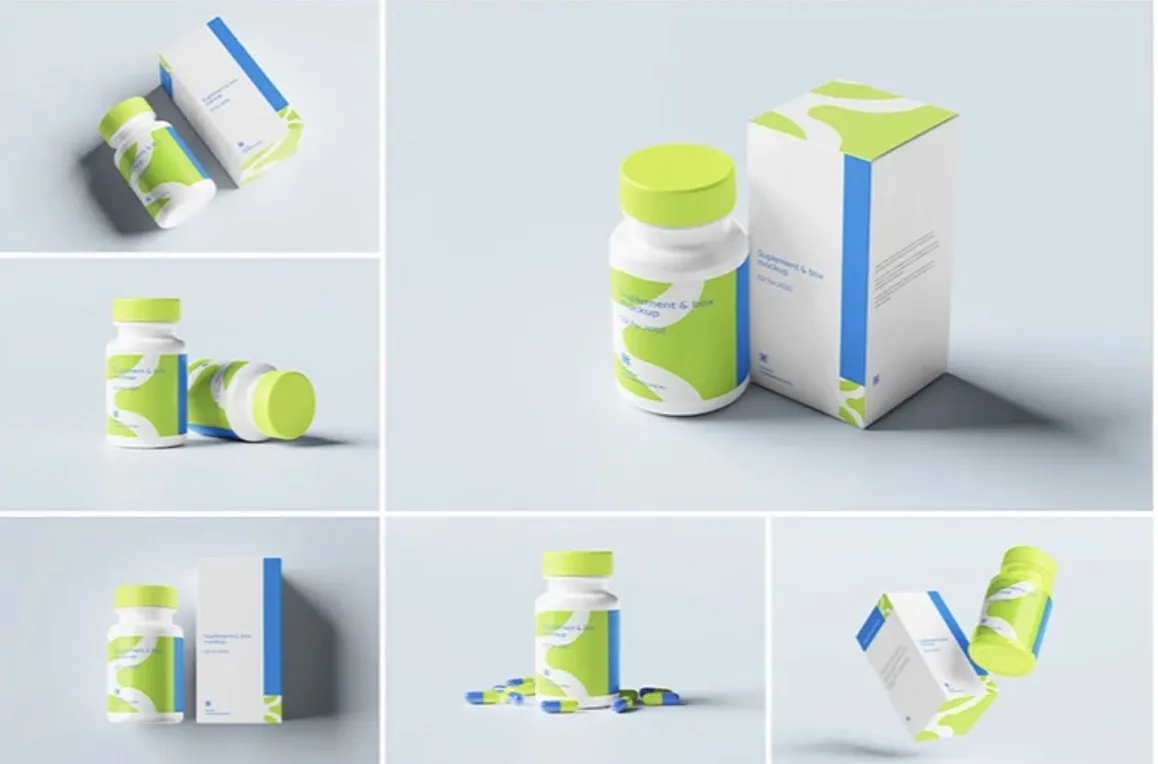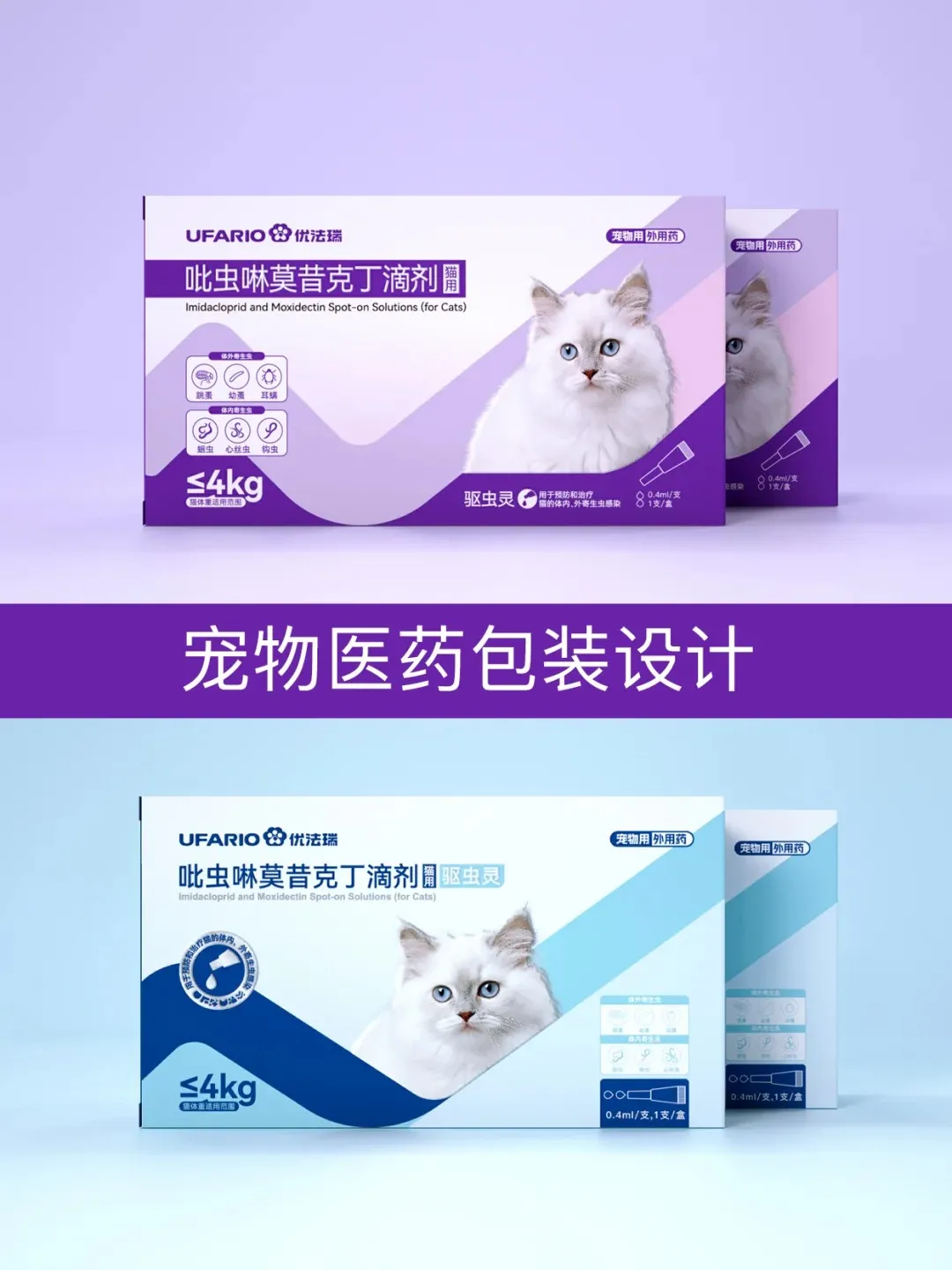


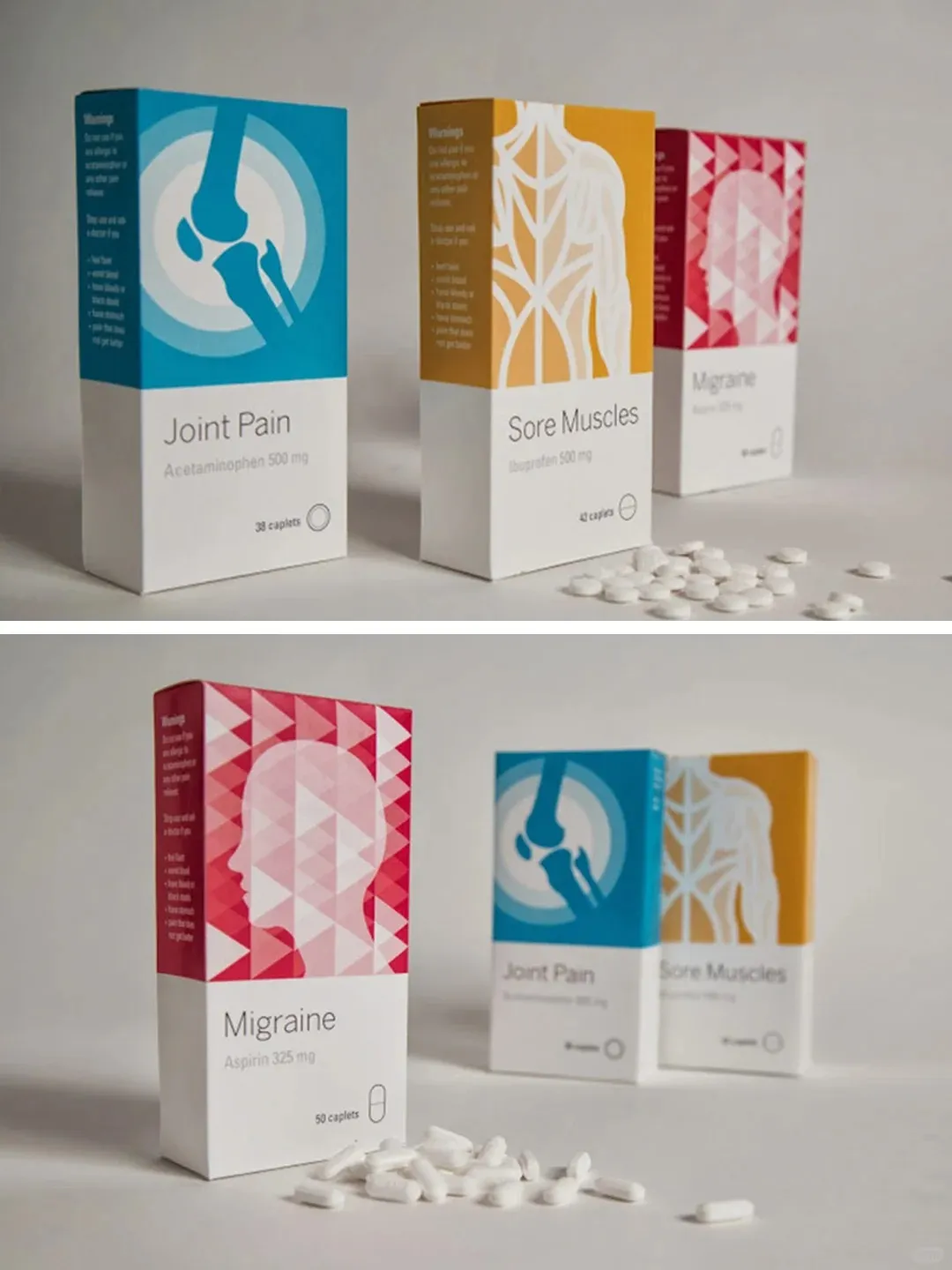
Pharmaceutical packaging box design and production
¥0
Product Details
Product Details
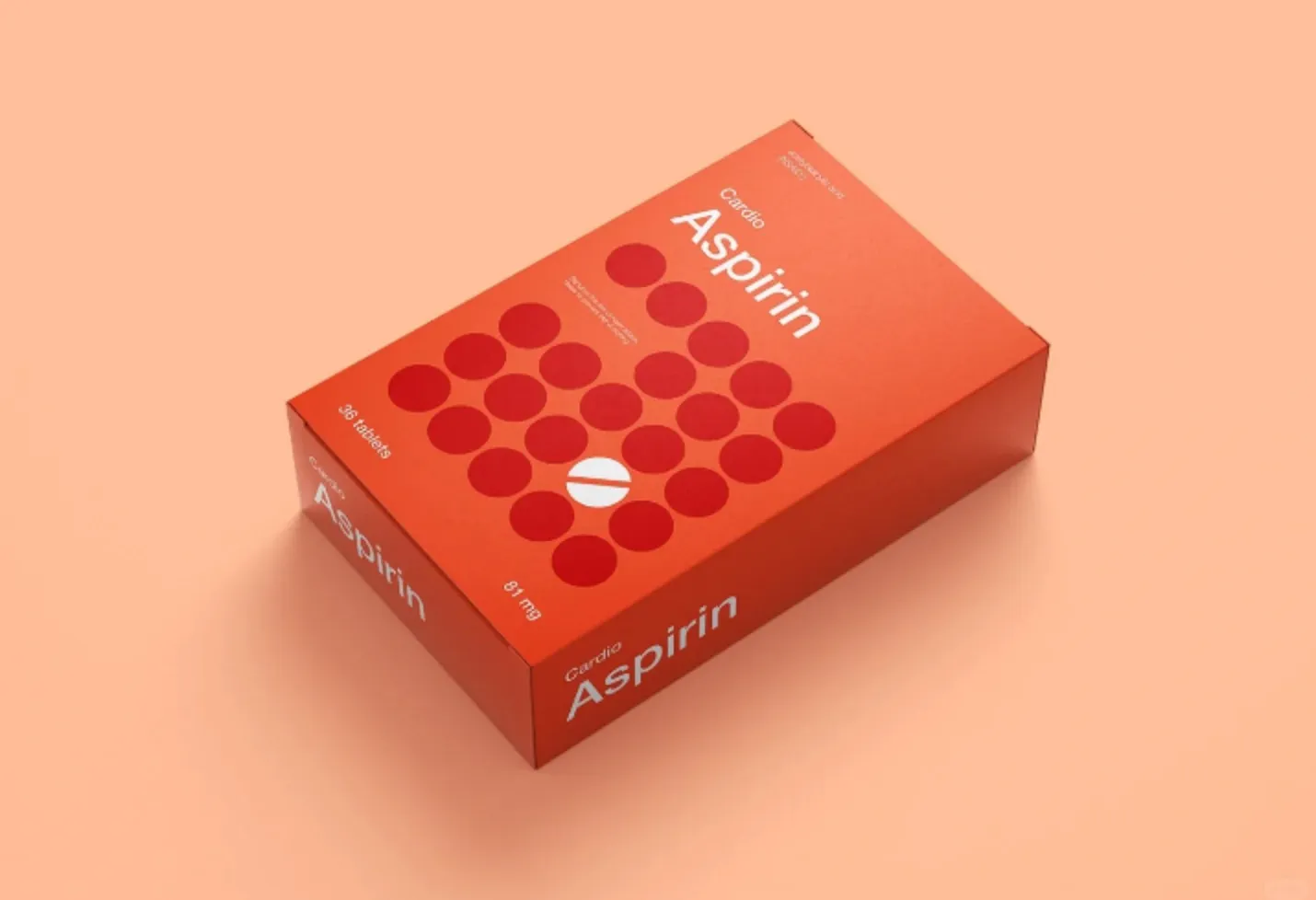
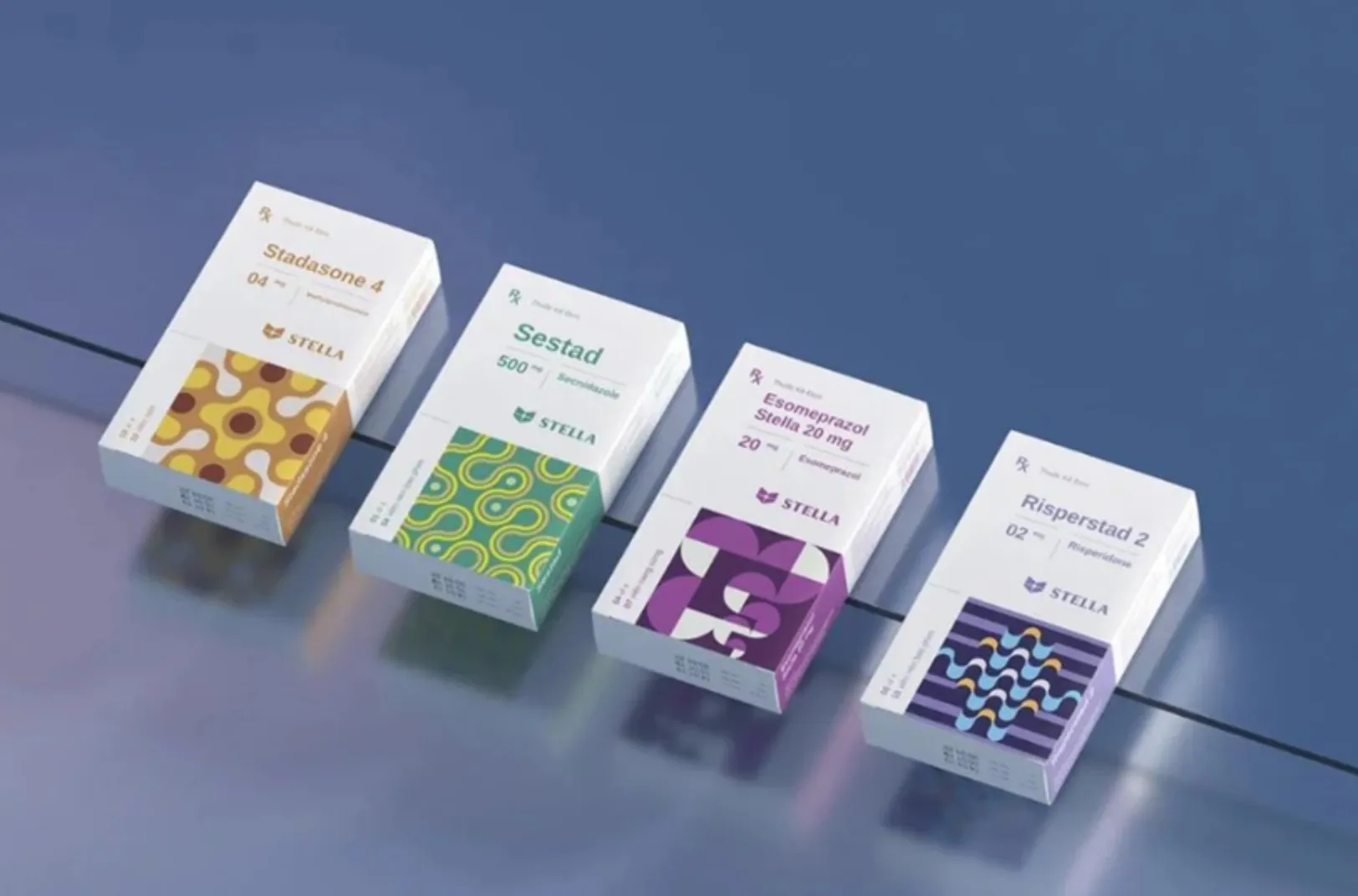
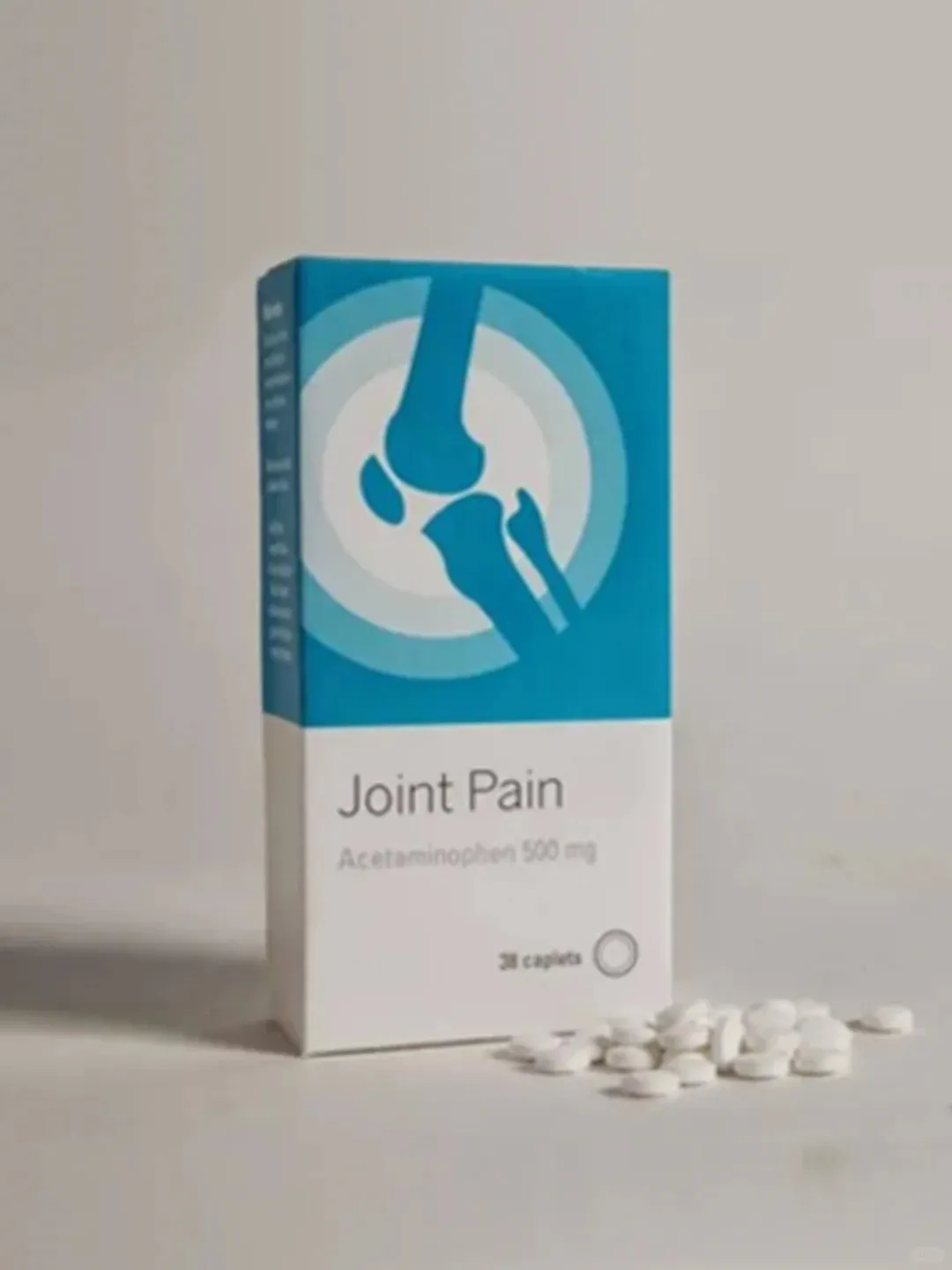
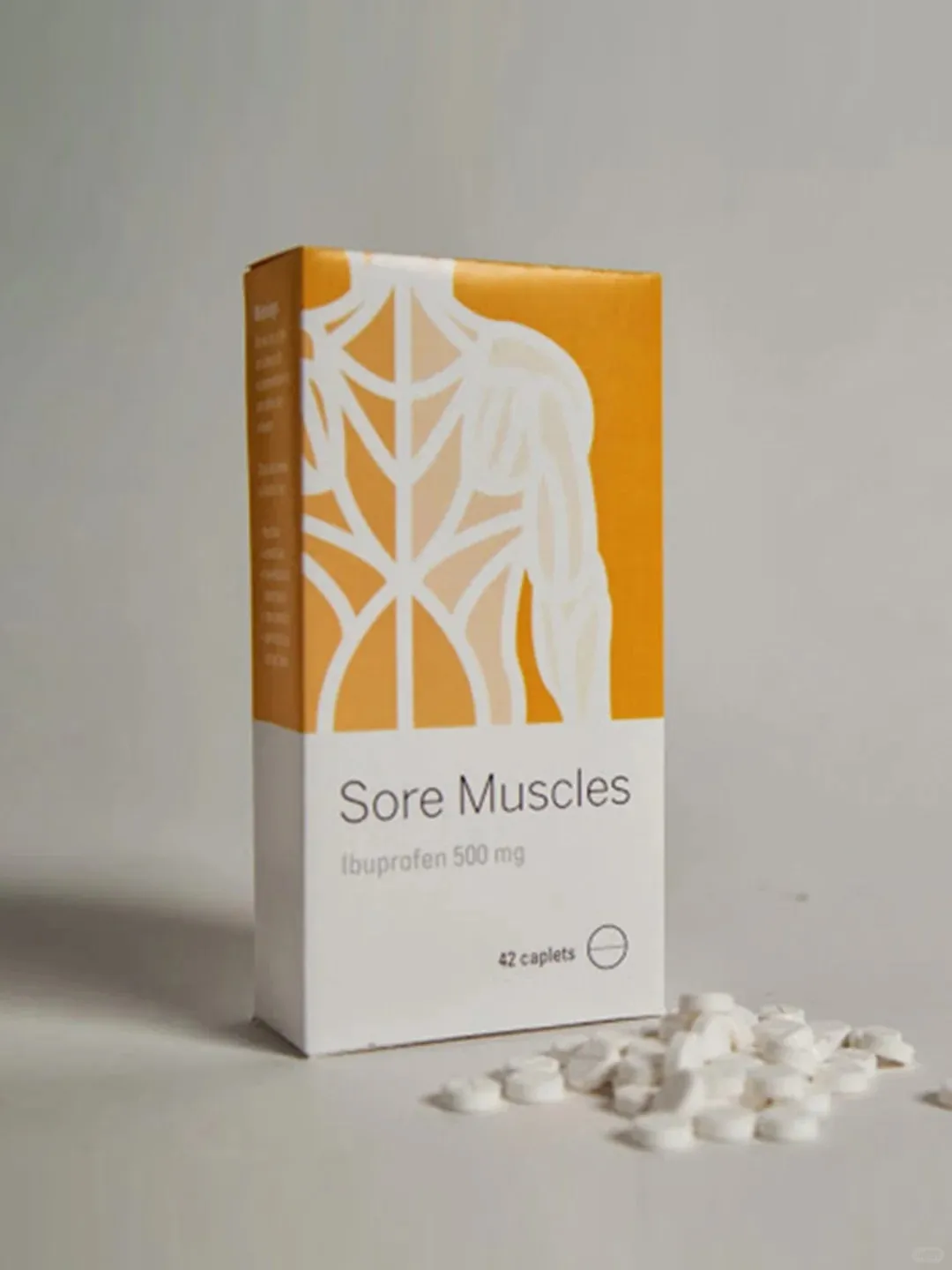
unique and creative drug packaging design: 1. Modern painkiller packaging uses abstract geometric lines, sharp serrated teeth symbolize acute pain, and smooth curves represent relief; 2. Symptoms are clearly distinguished: blue, orange, and red are used to represent joint pain, muscle soreness, and migraine, which is convenient for consumers to quickly identify. 3. Illustration is intuitive and easy to understand: There are corresponding diagrams on the packaging of each symptom, and auxiliary text descriptions to improve user experience. 4. Information is clearly marked: Drug ingredients (acetaminophen, ibuprofen, aspirin) and doses (500mg, 325mg) are clearly marked, and the number of tablets per box (38 tablets, 42 tablets, etc.) is also clear at a glance, which is convenient for consumers to choose and use. The point of drug packaging design is to create a clear and strong identity, which can both suggest symptoms and help patients browse the product more easily.
materials and structures
tissue paper materials: commonly used powder gray paper (single-sided white/gray), double powder paper (double-sided white) or coated paper, the gram weight range is usually 250g-450g. Corrugated types: According to the corrugated type, it is divided into A, B, C, E, F, etc., such as E pit (thin type) and C pit (commonly used in North America). Different corrugated types correspond to different compression ratio coefficients (such as 1.59 for A corrugated and 1.27 for E corrugated). Structural form: single corrugated (single wall), double corrugated (double wall), etc., to enhance the load-bearing capacity through the mounting process. Application field
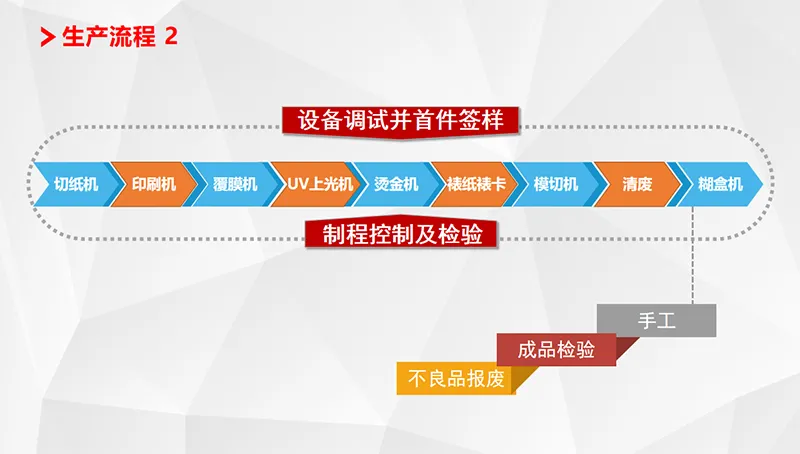
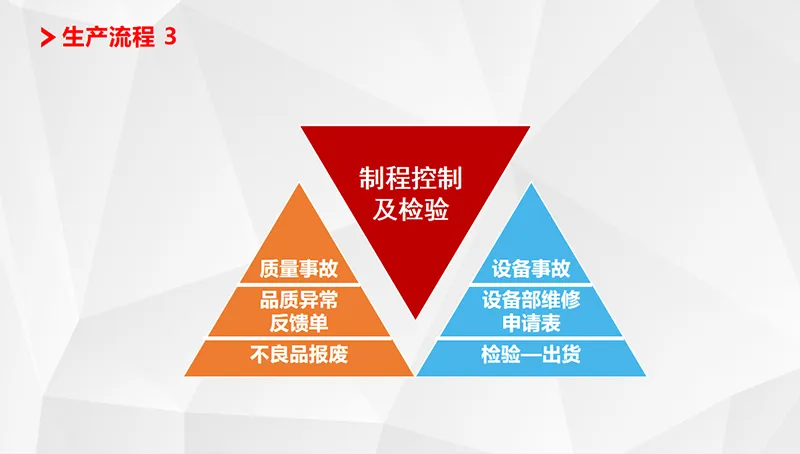
Applicable scenarios: Product packaging that requires a certain load-bearing, such as digital products, toys, cosmetics, food, etc. Advantages: Improve the display effect of goods through color matching and printing process, which is suitable for consumption scenarios that need to visually display the appearance of packaging. Production process Design and plate making: Design documents according to needs and output film (film plate making). Printing and mounting: After printing the surface paper, it is bonded with corrugated paper to form a composite structure. Die cutting and forming: Use a knife die to cut the shape and complete the final assembly through the gluing box process.